

Powder metallurgy methods can form products that are close to their final shape. However, for parts with multiple steps and more complex shapes, the forming process usually requires multifunctional presses and dies. How to technically modify existing general-purpose presses and dies so that they can press irregular multi-step parts, thereby both improving the level of existing equipment and saving investment while reducing product costs, is a problem that many manufacturers hope to solve.
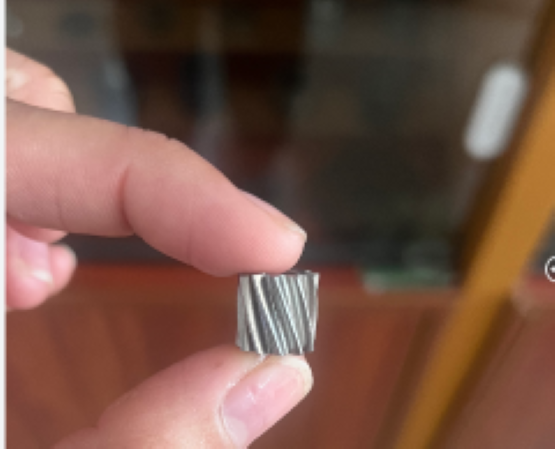
At the same time, users now have increasingly high requirements for product performance and surface quality. How to choose an appropriate heat treatment process so that the product achieves both high performance and good surface quality is also a problem that needs to be addressed in actual production. Practice has shown that, by adopting suitable methods, these problems can indeed be solved.
The powder was mixed in a V-type powder mixer; pressed on a YA79125 hydraulic press; and sintered in a shuttle-type sintering furnace at a temperature of 1100℃ for 90 minutes under a decomposed ammonia atmosphere. After sintering, the samples were drilled, tapped, quenched, and subjected to low-temperature tempering. Finally, they were oil-impregnated in a vacuum oiling machine. The difficulty in forming this product lies in its shaping process. The product has three steps on the top and bottom, meaning that the forming process requires three upper and three lower punches.
The existing YA79125 hydraulic press has a single upper and lower cylinder, and a typical die set is equipped with only one upper and one lower punch, lacking the capability to form multi-stepped parts. Upon analysis, we simplified the die structure to have two upper and two lower punches, combining the inner concave small steps with the end face into one punch. Additionally, the original standard die set was modified to have a dual-lower punch structure. The upper punch structure was also modified to accommodate two punches, adding a spring-floating mechanism to the outer upper punch to ensure even powder distribution and consistent compression. Moreover, an ejection mechanism was added to the inner upper punch. During pressing, the outer upper punch first enters the female die to a depth approximately twice the height of the step, followed by the inner upper punch entering the female die. Then, the outer upper punch floats upward relative to the inner upper punch while the outer lower punch and female die float downward, completing the pressing process. For demolding, a protective demolding method is used: both upper punches hold the pressed billet, then the female die, outer lower punch, and core rod are pulled down first; subsequently, the two upper punches rise, and the inner upper punch uses the ejection mechanism during its upward movement to push the pressed billet out of the outer upper punch.
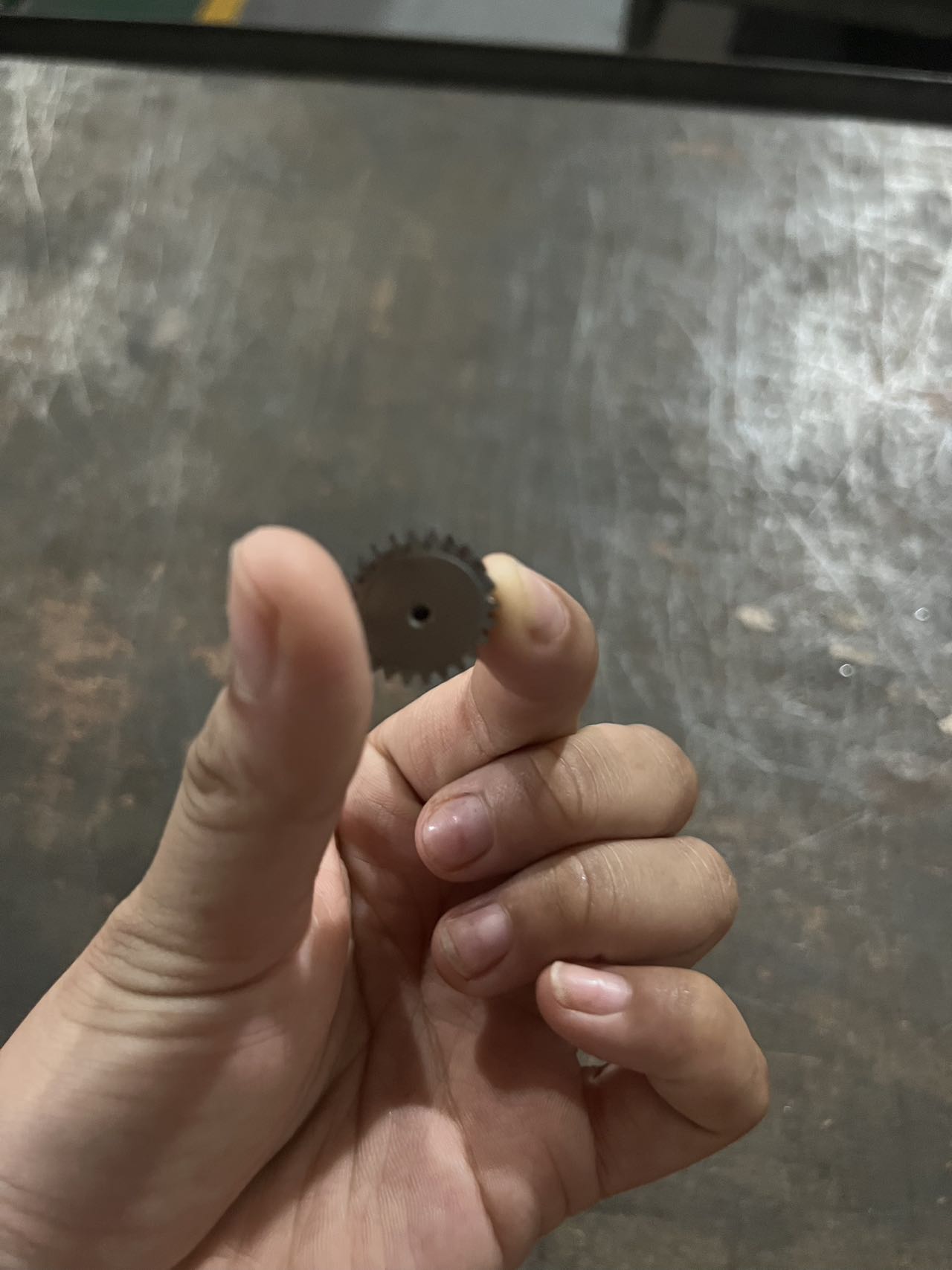
The product requires high surface quality, which is difficult to ensure using conventional heat treatment methods. Therefore, we use a mesh-belt continuous bright quenching furnace for bright quenching. The heating temperature is 1200°C, the belt speed is 50 mm/min, and a decomposed ammonia atmosphere is used for protection. After heating, the material is automatically quenched in bright oil and then tempered at 200°C for 2 hours. After treatment, the surface is bright, the hardness is uniform, and deformation is minimal. The results are shown in Table 2. From Table 2, it can be seen that the dimensions slightly change after heat treatment, mainly expanding, which may be due to phase transformation during quenching, but this can be controlled within the allowable tolerance. At the same time, it can also be seen that as long as the density is greater than 6.4 g/cm³, the heat-treated hardness can be ensured to be above HRC30.
