

Mechanical Pulverization: Uses mechanical force to break block metals or alloys into powder. The equipment is simple, costs are low, and production is high, but the powder shapes are irregular, particle size distribution is wide, and it is easy to introduce impurities.

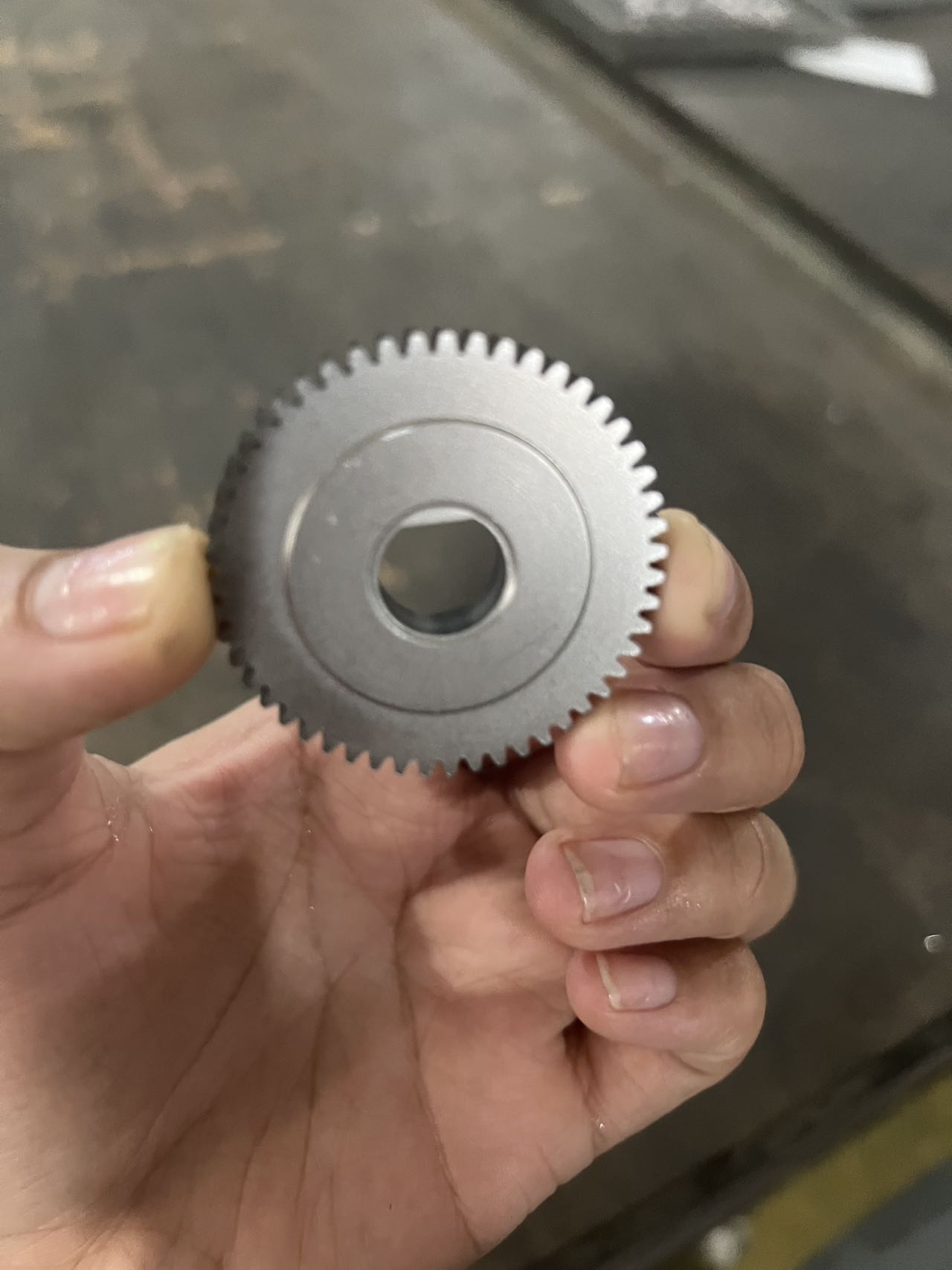
Mold Pressing: Puts pretreated metal powder into a mold and applies pressure to compact and form it. The steps include powder filling, pressing, and demolding. It is suitable for products with simple shapes and high precision requirements, such as gears. The advantages are simple equipment, high efficiency, low cost, and suitability for mass production; the disadvantages are that mold design and manufacturing for complex products are difficult, and density uniformity is hard to guarantee.
Conventional Sintering: Heats the formed body at suitable temperatures and atmospheres (hydrogen, nitrogen, vacuum, etc.) to bond powder particles and improve density and strength. Hydrogen atmosphere removes impurities, nitrogen atmosphere prevents oxidation, and vacuum is suitable for materials with high oxygen content requirements.
Isostatic Pressing: Uses liquid to apply uniform pressure, placing powder into an elastic mold in a high-pressure container for forming. Cold isostatic pressing is performed at room temperature and is suitable for products with complex shapes and high density requirements; hot isostatic pressing applies high temperature and high pressure simultaneously and is used for high-performance aerospace materials. The advantage is uniform density in all directions for the product, suitable for large and complex products; the disadvantages are expensive equipment, long cycles, and high costs.
