

Spur gears are one of the most common types of gears in mechanical transmission, with advantages evident in aspects such as structure, performance, and ease of application.
The following is a detailed explanation of their core advantages:
1. Simple structure and convenient manufacturingLow design and processing difficulty: The tooth direction of spur gears is parallel to the axis, and the tooth shape is linear. Compared to complex tooth shapes like helical gears and bevel gears, the design principle is simpler. During processing, parameters like helix angle do not need to be considered, requiring lower standards for equipment and processes.Lower cost: Due to their simple structure, whether it involves casting, forging, or cutting processing, production efficiency is higher, and material utilization is also more effective. Therefore, the manufacturing cost is usually lower than that of other types of gears (such as helical gears and worm gears).
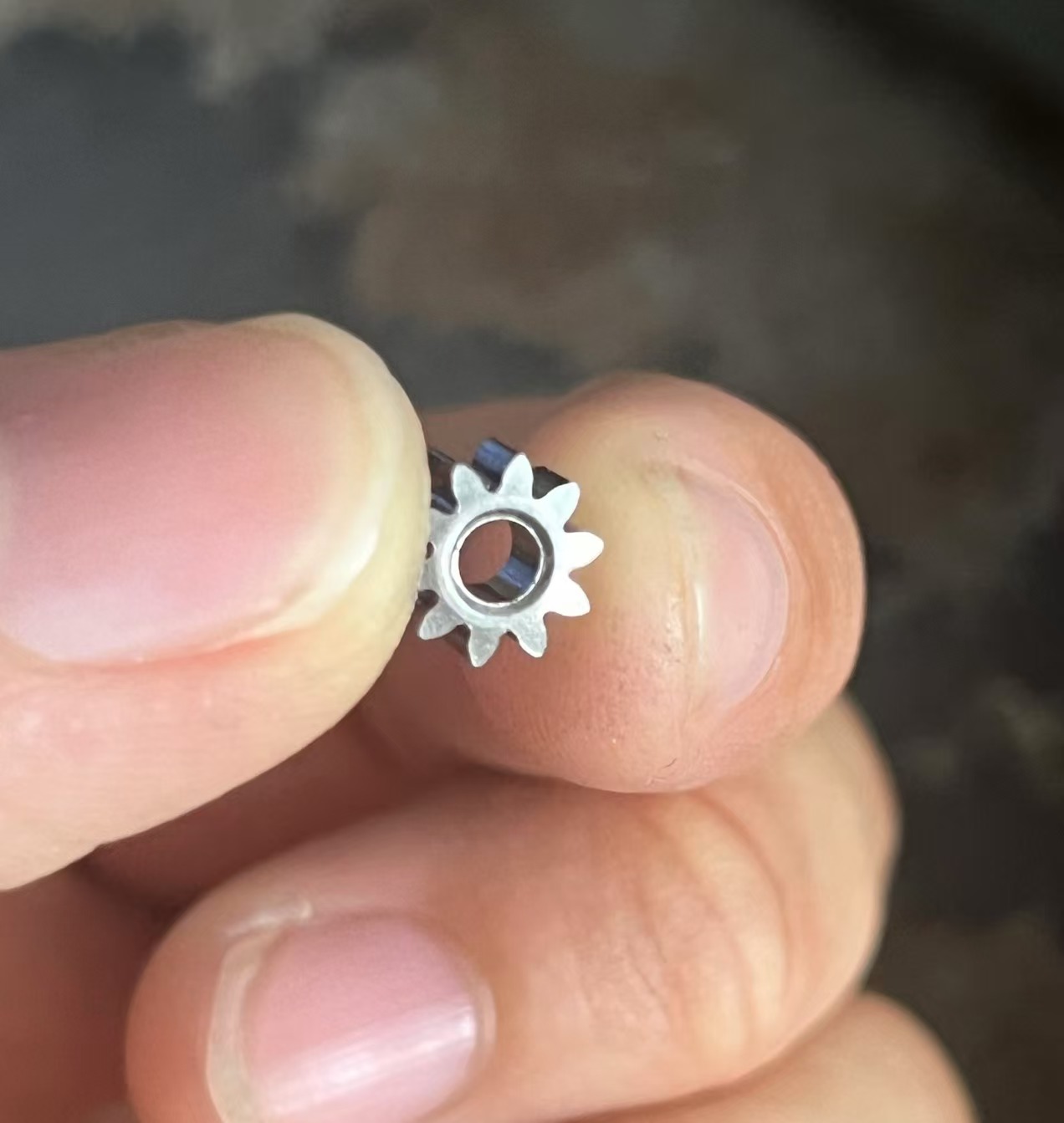
. High transmission efficiencyWhen spur gears mesh, the contact line of the tooth surface is parallel to the axis, resulting in minimal relative sliding during transmission, leading to low energy loss. In ideal conditions, their transmission efficiency can reach 98% to 99%, which is higher than that of helical gears (due to axial forces leading to increased bearing friction, resulting in slightly lower efficiency) and worm gears (which typically have efficiencies below 90%).They are suitable for high-speed transmission scenarios, such as connections between motors and equipment, and spindle drives in machine tools.
