

1. Core Performance Advantages of Powder MetallurgyPowder metallurgy has formed advantages that are difficult to replace by traditional casting and forging through the near-net-shape forming process of "powder pressing → sintering", especially suitable for mass production of components with complex structures and uniform performance (such as gears and bearings).
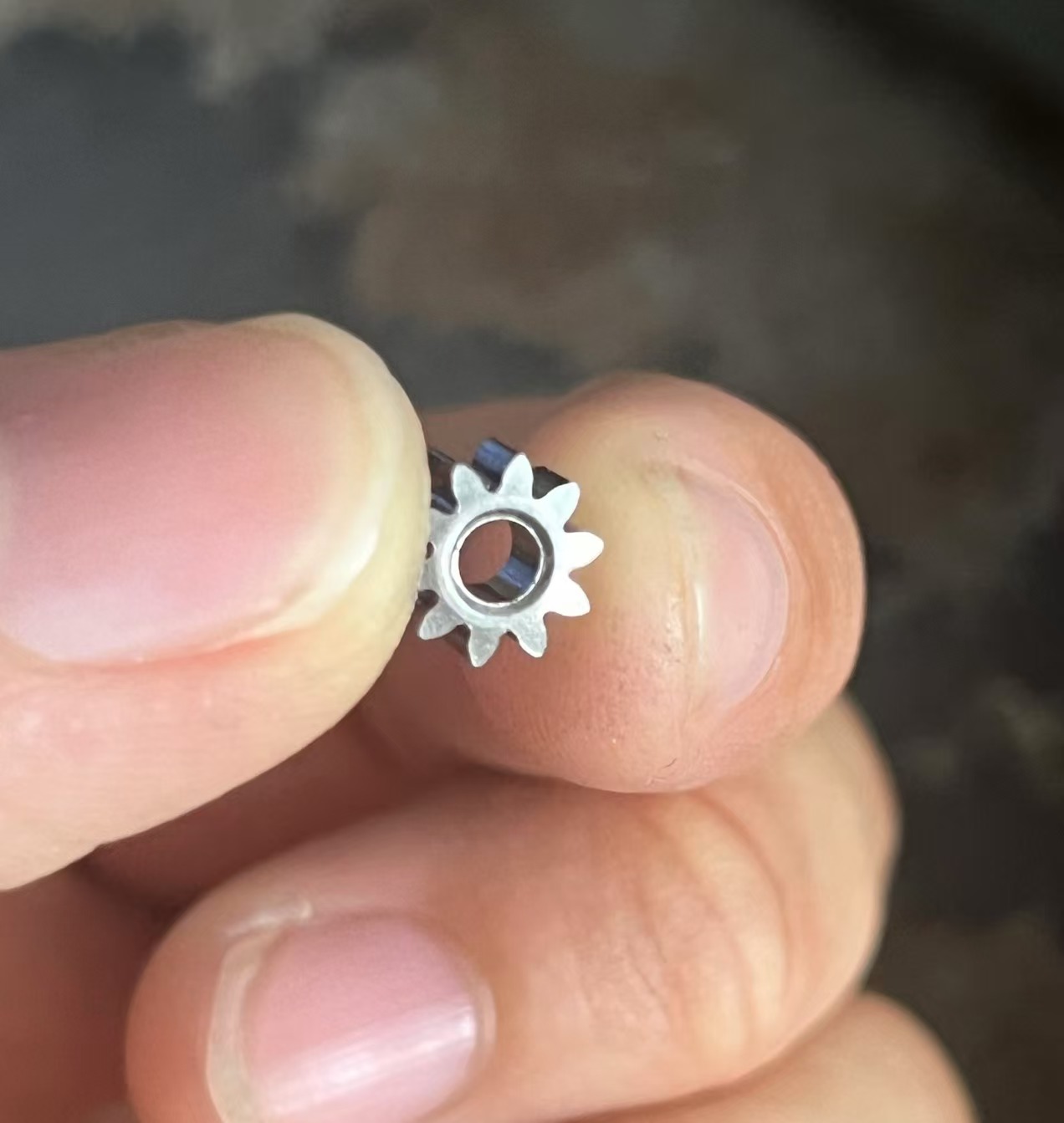
2. Mechanical Properties: Adjustable across the entire range from basic to high-endThe mechanical properties (strength, hardness, toughness, etc.) of powder metallurgy are not fixed values; they can be flexibly adjusted through material formulations and subsequent processes to meet different scenario requirements:Basic Performance Version: Using iron-based powders (such as Fe-Cu-C series), after conventional sintering, the tensile strength can reach 300-600MPa, with hardness around HB 100-200, sufficient for low-load scenarios such as home appliance motors and small machinery drives.Mid to High-End Performance Version: Through "pre-alloyed powders (such as Fe-Ni-Mo series) + warm compaction + high-temperature sintering", the tensile strength can be increased to 800-1200MPa, with hardness reaching HB 250-350, suitable for mid to high-load scenarios like traditional fuel vehicle transmission gears and industrial motor shafts.High-End Performance Version: By adding "surface densification (such as rolling, carburizing)" or "hot isostatic pressing" processes, surface hardness can exceed HV 600, with fatigue life comparable to forged steel (like new energy vehicle electric drive gears) and even exceeding forged steel in lightweight (core porous).
3. Precision and Consistency: Near-net shape forming reduces machining, suitable for mass standardizationThe "mold pressing" process of powder metallurgy determines its inherent advantages in precision and consistency:Dimensional Precision: The dimensional tolerance of parts after forming can be controlled within ±0.05mm, with the precision of key structures such as tooth shapes and hole positions reaching IT7-IT8 levels. Some high-end products (like robotic joint gears) can achieve IT6 level precision through subsequent honing, approaching the level of precision forging.Performance Consistency: The uniformity in powder mixing and continuous sintering process allows hardness and density differences of parts in the same batch to be ≤5%, which is significantly lower than cast parts (where the difference can reach 10%-15%), thus avoiding equipment failures caused by performance fluctuations.
