

In modern industrial equipment, the manufacturing process of metal parts is undergoing a revolutionary upgrade. As a typical representative, powder metallurgy gears have been widely used in home appliances, automobiles, construction machinery and other fields.
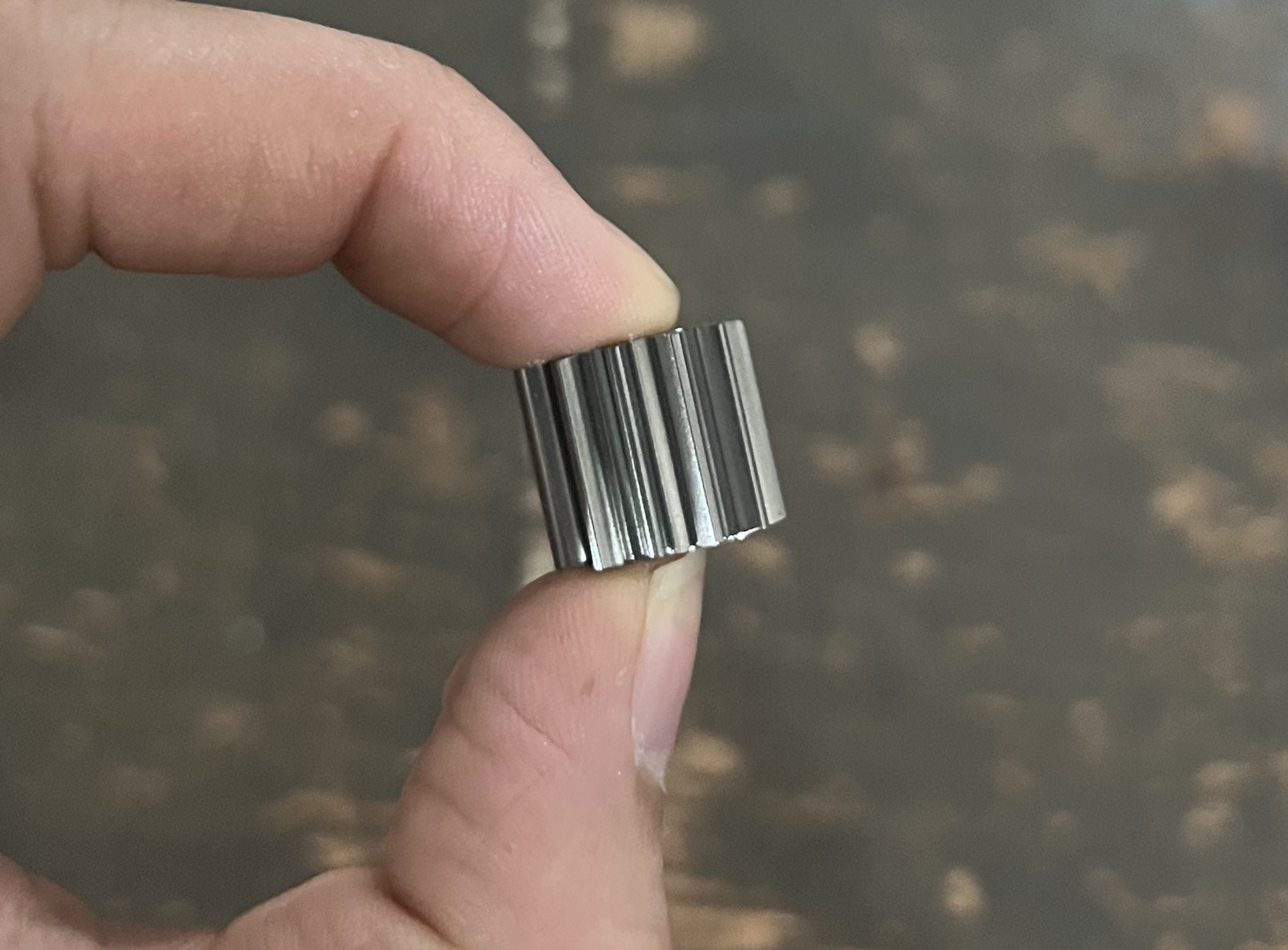
This article will take roller equipment as an example to analyze the scientific principles and real-world applications of this technology. 1. Manufacturing principle of powder metallurgy Powder metallurgy is a process of manufacturing parts through metal powder pressing and sintering at high temperatures, and its history can be traced back to the production of tungsten wire in 1909.
Compared with traditional cutting processing, this technology can reduce the gear manufacturing process from 12 to 6-8 passes, increase the material utilization rate to 85%-95%, and significantly reduce energy consumption. Drum equipment gears are mostly made of iron-based powder (adding 1%-3% copper, nickel and other elements), molded by 400-800MPa pressure, and sintered in a protective atmosphere of about 1120°C. The density of the finished product can reach 6.8-7.2g/cm³ (the theoretical density of pure iron is 7.87g/cm³), and the tooth shape accuracy meets the ISO level 8-9 standard, which is equivalent to the single tooth tolerance control in the range of 20-40μm. 2. Technical adaptability of drum equipment The porous structure of powder metallurgy gears (porosity 5%-15%) has the advantage of natural oil storage.
Experimental data show that in the washing machine drum drive system, with copper or oil seepage treatment, the gear runs continuously for 8000 hours at 1500rpm, and the wear can be controlled within 0.15mm. This feature makes it excellent in frequent start-stop conditions. Industrial applications pay more attention to material performance optimization. In the transmission system transformation project of a cement plant, the powder metallurgy gear set using a special sintering process has a service life 1.8 times higher than that of traditional gears at a working temperature of 70°C. The metallographic analysis of the material showed that the internal carbide diffusion distribution was reaching HRC 20-45. 3. Usage specifications and industry status The assembly specification recommends using H7/k6 transition matching, and the assembly interference is controlled at 0.01-0.03mm.
When using ISO VG68 viscosity synthetic gear oil, solid lubricants such as molybdenum disulfide need to be supplemented regularly. Failure warning When the temperature of the gearbox rises by more than 3°C from the baseline value, or the vibration acceleration value exceeds 4m/s², preventive maintenance is recommended. According to the statistics of the Powder Metallurgy Branch of the China Steel Association, the output of powder metallurgy parts in our country will reach 800,000 tons in 2022, of which gear products account for about 35%.
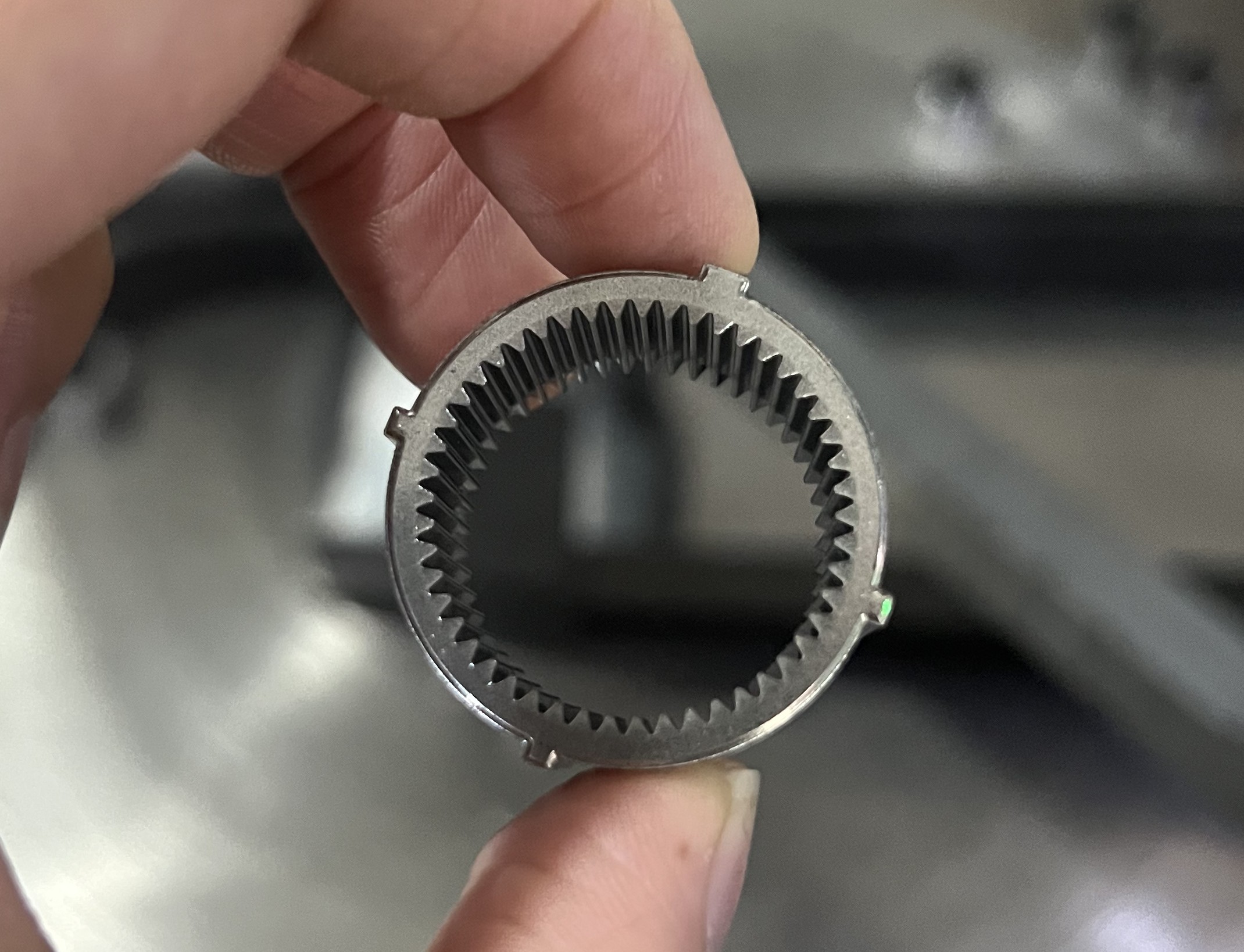
In the automotive field, this technology has achieved mass production of gearbox planetary gears, and a German brand has successfully increased the fatigue strength of gears by 40% using gradient pressing process. 4. Technological development and practical challenges At present, metal 3D printing technology has begun to be combined with powder metallurgy, and topology optimization gears have been trial-produced in the laboratory, with a weight reduction effect of 25%. However, due to equipment cost and process stability, this technology has not yet been applied on a large scale. Industry research shows that powder metallurgy gears still need to be used in conjunction with traditional forging processes in extremely heavy-duty (>5 tons) scenarios.
This manufacturing technology, which originated a hundred years ago, continues to evolve in the balance between precision and strength. When we disassemble the drum equipment, the gears shining with a metallic luster are a microcosm of modern industrial precision manufacturing.
