

1. Transmission Accuracy RequirementsEquipment Accuracy Requirements: For high-precision equipment, such as precision instruments and CNC machine tools, extremely high transmission accuracy is required, necessitating the selection of high-grade powder metallurgy gears. These devices typically require the transmission error of the gears to be very small to ensure precise operation. For example, in the spindle transmission system of a CNC machine, the accuracy of the gears directly affects the machining precision, so gears with an accuracy grade of IT5 or even higher are needed.For equipment with general accuracy requirements, such as ordinary mechanical transmissions and household appliances, medium-grade accuracy gears can be selected. These devices have relatively lower requirements for transmission accuracy, but stability and reliability still need to be ensured. For example, the gear accuracy grade in the transmission system of a washing machine is usually around IT7 - IT8.Transmission Ratio Requirements: When the transmission ratio is large, gear errors are amplified, so higher accuracy grade gears are required to ensure transmission precision. For example, in a reducer with a very high reduction ratio, higher accuracy grade gears are needed to ensure the output shaft's speed and torque precision.For small transmission ratios, gear errors have a relatively minor impact on transmission, so slightly lower accuracy grade gears can be chosen. However, other factors such as load, speed, and their effect on accuracy should also be considered.
2. Working EnvironmentTemperature Variation: If there are significant temperature changes in the working environment, it can affect the dimensional stability and meshing accuracy of the gears. In such cases, gears with higher precision grades should be selected, and special materials and heat treatment processes should be considered to improve the thermal stability of the gears. For example, gears working in high-temperature environments need to be made of high-temperature-resistant materials and undergo appropriate heat treatment to ensure that they maintain high precision under elevated temperatures.For working environments with minor temperature fluctuations, gears with slightly lower precision grades can be chosen, but other factors affecting accuracy should also be taken into account.Dust and Corrosive Media: If the working environment contains dust or corrosive media, it can accelerate the wear and corrosion of gears, reducing their precision and lifespan. In such cases, gears with good sealing and corrosion resistance should be selected, and regular maintenance should be performed. Additionally, choosing gears with slightly higher precision grades can help offset the precision loss caused by wear and corrosion.For clean, non-corrosive environments, gears with slightly lower precision grades can be chosen, but their quality and reliability must still be ensured..
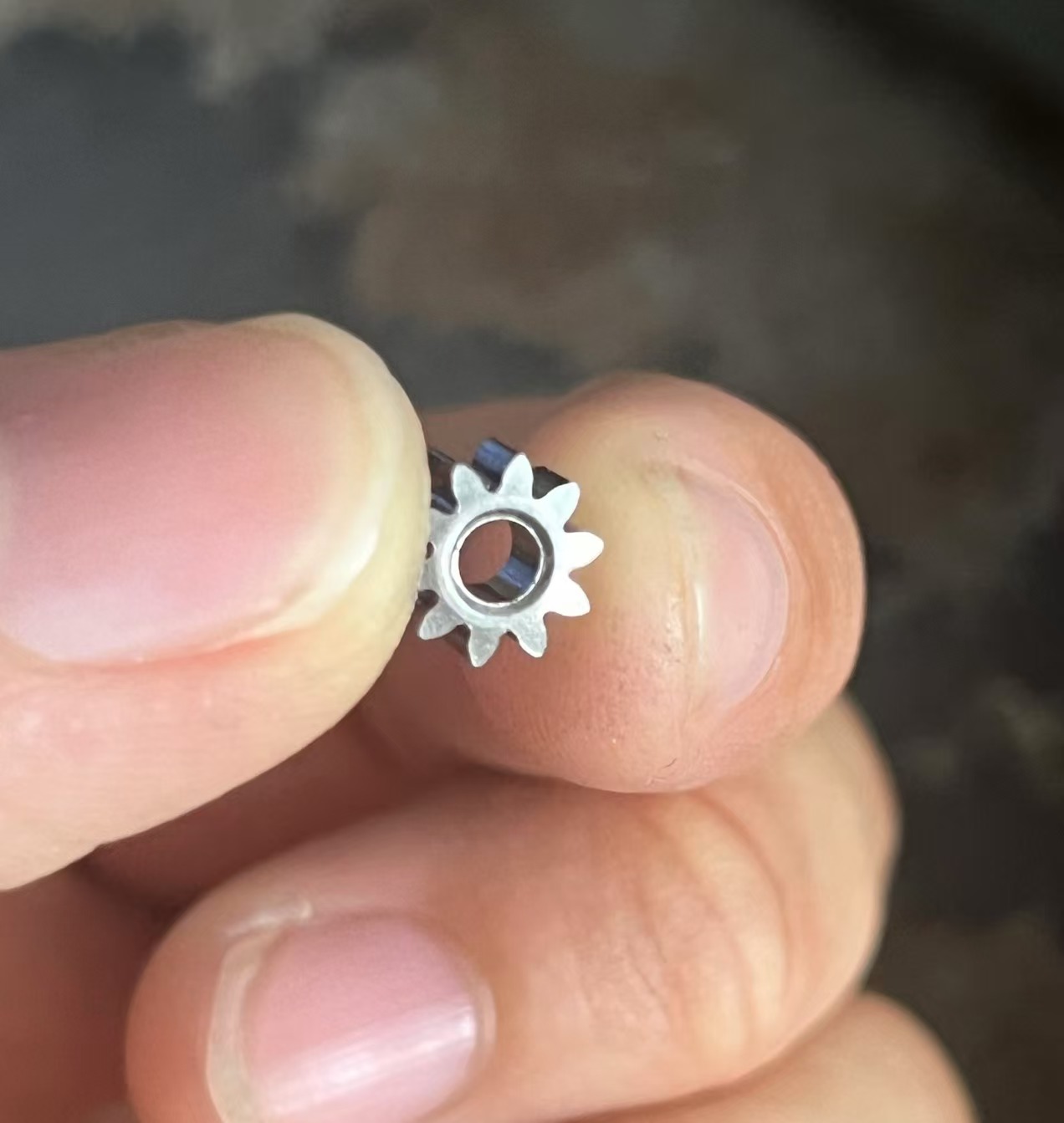
3. Cost ConsiderationsRelationship Between Precision Grade and Cost: Generally, the higher the precision grade, the higher the manufacturing cost of the gear. Therefore, when selecting a gear's precision grade, it is necessary to balance cost and performance. Excessively high precision can lead to a substantial cost increase, which may not be necessary for practical applications.The appropriate precision grade of gears should be selected based on specific usage requirements while meeting performance needs to reduce costs. For example, in cost-sensitive applications, a lower precision grade may be chosen, with performance improved through optimized design and manufacturing processes.Cost-Performance Analysis: When choosing a gear's precision grade, not only the initial cost but also factors such as gear lifespan and maintenance costs should be considered. Selecting gears with high cost-performance ratio can ensure performance while reducing overall costs.
