

I. Core Manufacturing Process of Powder Metallurgy Gears:
1. Powder EquipmentThe starting point of powder metallurgy is the meticulous preparation of metal powders. Commonly used metal powders in production include iron-based, copper-based, and stainless steel powders. Their particle size, purity, and sphericity directly determine the mechanical properties of the gears.
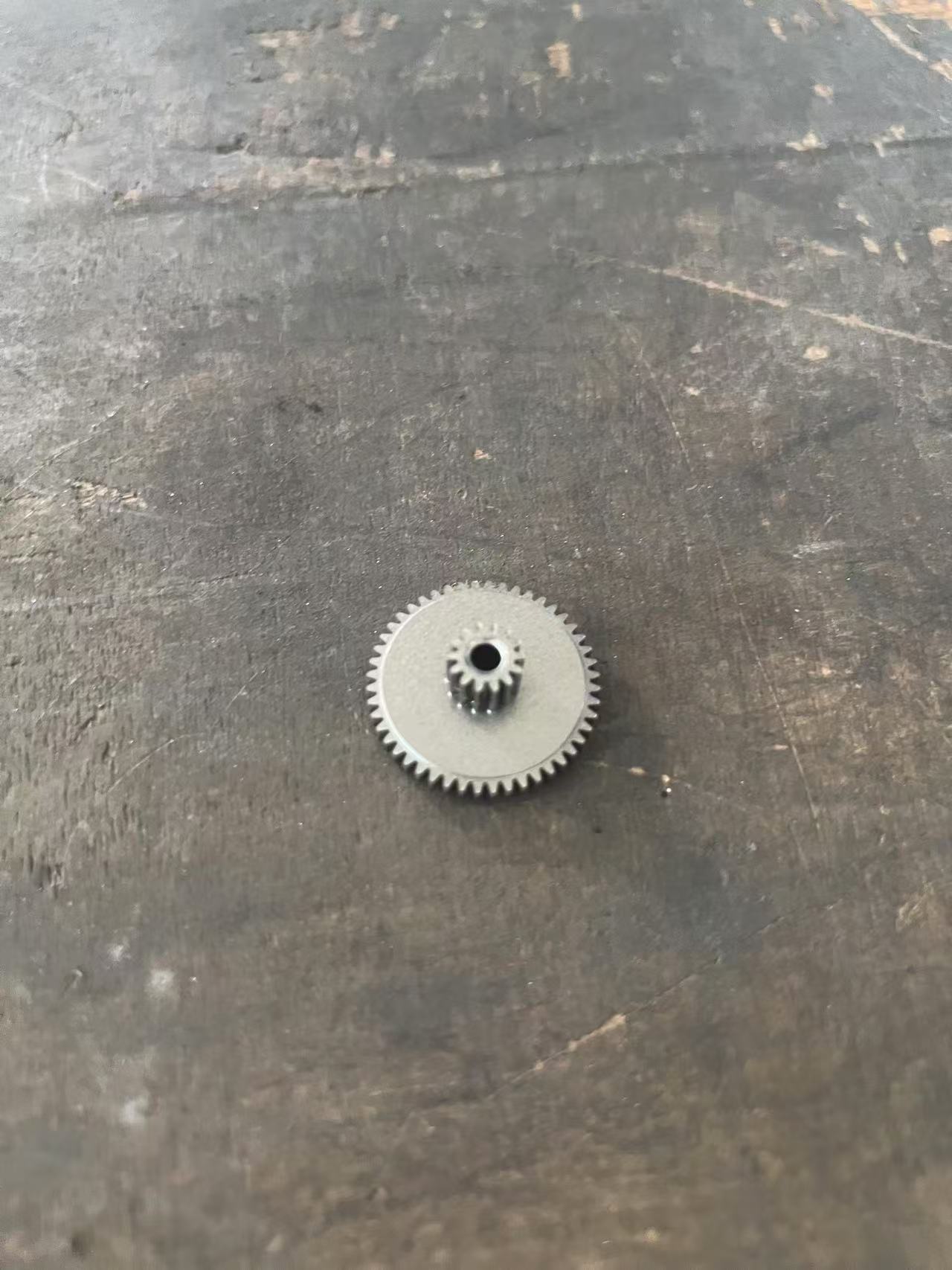
The preparation process typically includes:Atomization:
Molten metal is atomized with high-pressure gas or water to form micron-sized spherical powders;
Reduction powder production: Oxygen is removed from metal oxides using a reducing agent to obtain high-purity powders;
Screening and classification: Precision sieves are used to grade the powder particle sizes, ensuring a uniform particle size distribution.
2. Blending ProcessTo improve the molding performance of the powder, metal powders need to be mixed with lubricants such as zinc stearate and binders such as phenolic resin in proportion. This process is carried out with a three-dimensional blender to achieve dynamic and uniform dispersion, ensuring that each powder particle is evenly coated with additives, providing good flowability and plasticity for subsequent pressing and molding.
3. Pressing and MoldingThe mixed powder is quantitatively filled into high-precision mold cavities and pressed under high pressure of 200-800 MPa to form gear blanks with initial strength. Key aspects of this stage include:Mold precision: Using hard alloy or ceramic molds with tolerances controlled within ±0.005 mm;Pressure control: Constant pressure pressing is achieved through a servo press to avoid cracks caused by local stress concentration in the powder;Demolding technology: Nitrogen or hydraulic demolding is used to ensure the integrity of the blank.
4. Sintering and DensificationThe pressed blanks are sintered in a furnace at 1000-1300°C. For iron-based gears, under a protective atmosphere of ammonia decomposition gas (90% N₂ + 10% H₂), diffusion occurs between powder particles to form metallurgical bonds, reducing porosity from 30% to below 5% and increasing strength by 5-8 times. Zhongshan Xiangyu Company is equipped with 6 continuous sintering furnaces and stainless steel vacuum furnaces, which can accurately control the temperature profile and atmospheric environment to meet the sintering requirements of different alloy systems.
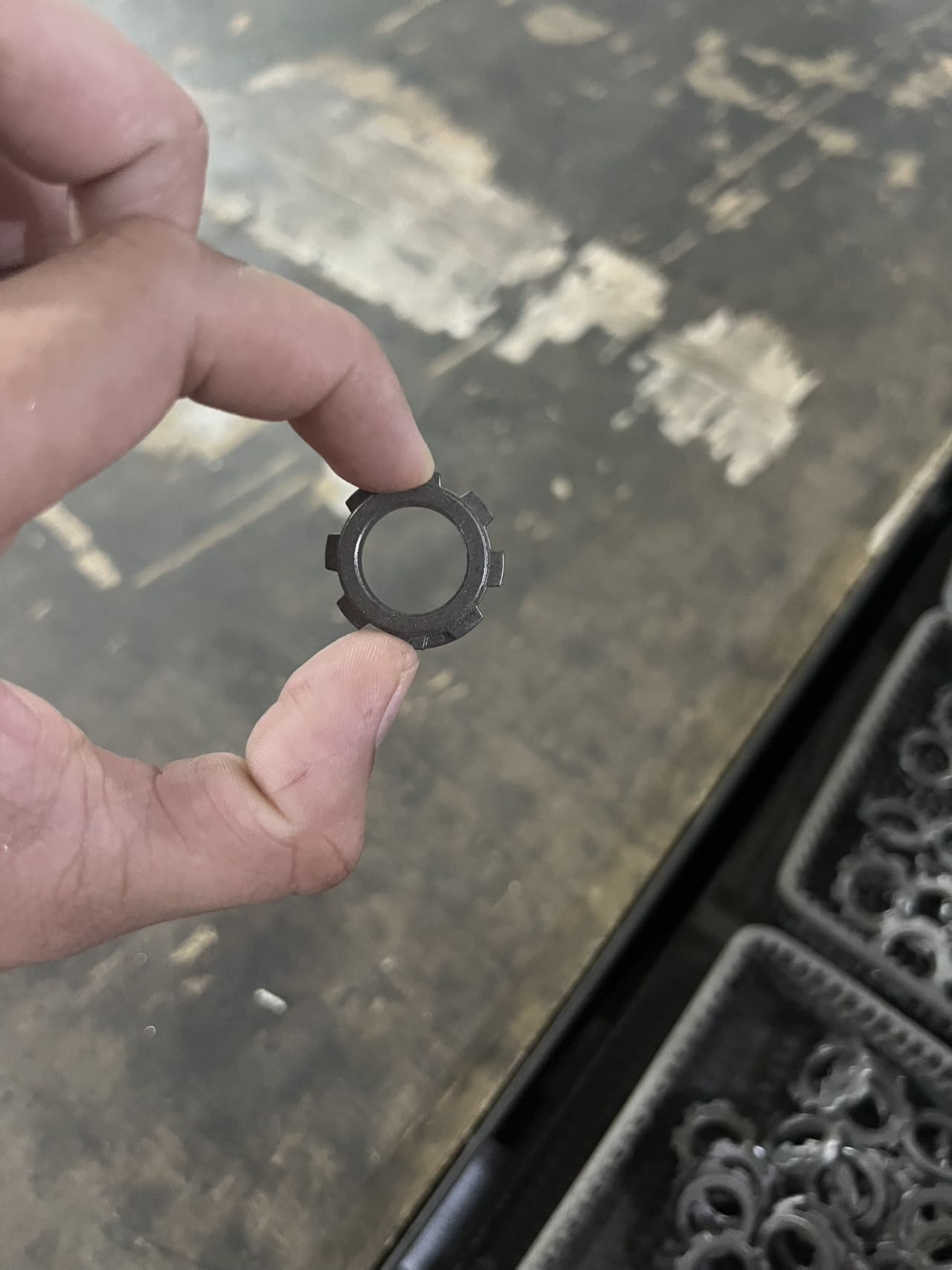
5. Post-Strengthening TreatmentHeat treatment: Quenching and tempering processes (such as carburizing and quenching) are used to achieve a surface hardness of HRC50-60 while maintaining core toughness;Finishing: CNC grinding is used for gear tooth surface finishing, with tooth accuracy up to ISO 6 and surface roughness Ra ≤0.8 μm;Surface protection: Electroplating (e.g., nickel plating, zinc plating) or passivation treatment is used to enhance the corrosion resistance of the gears.
